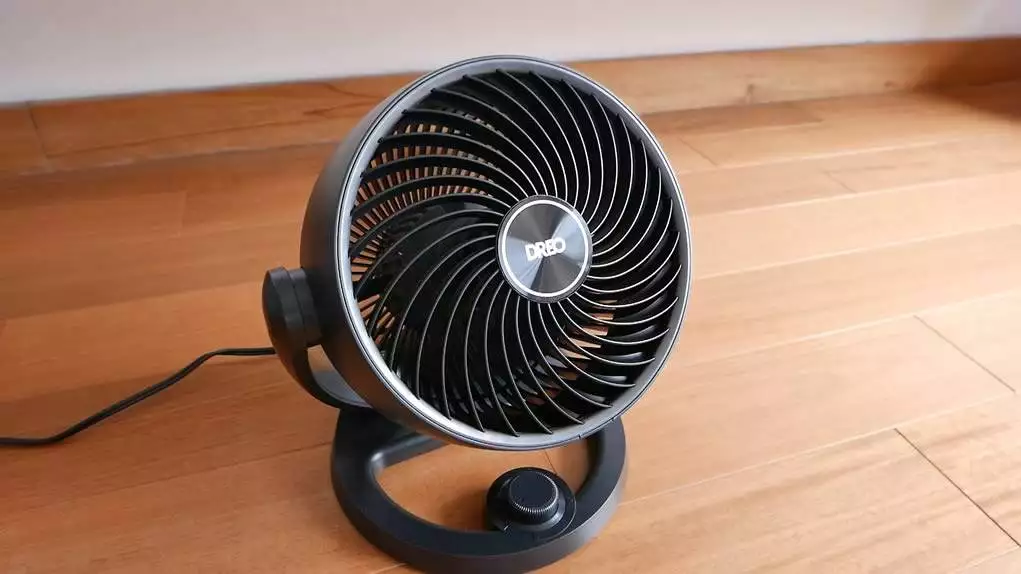
There’s something satisfying about finding a product that quietly does its job for years without asking for attention.
That’s been my experience with this Dreo Fan.
I bought it almost two years ago through Amazon, but not using their international shipping. That would’ve killed the deal. Instead, I sent it to a courier and had it forwarded to Perú. Even with that extra step, it still came out cheaper.
And that’s where things get interesting.
Because locally, you can find fans—but they’re usually big, loud, and not exactly cheap. I remember seeing a Miray pedestal fan at Hiraoka going for around 219 soles (about $63). Nothing special, just the typical bulky design most people settle for.
Meanwhile, this one cost me $36.
That price gap alone already puts it in a different conversation.
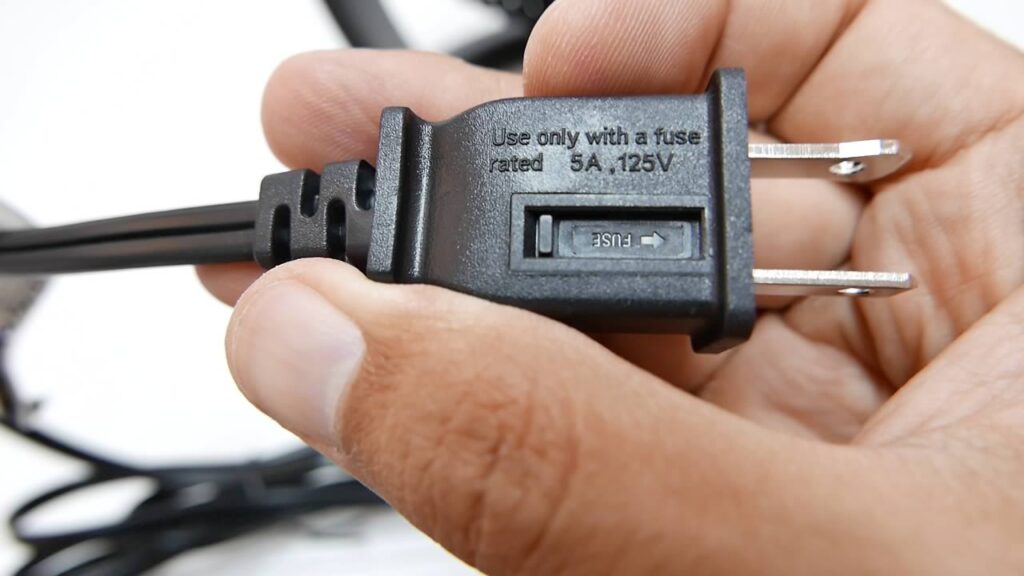
Now, there was a catch. The fan runs on 110V, so I had to get a transformer to use it in Peru’s 220V system. Not ideal, but not a dealbreaker either. Once that was sorted, it became part of my daily setup.
I use it in my office during the hotter months—roughly from January to May. And most of the time, it just blends into the background.
What stands out first is how quiet it is.
At the lowest setting, it’s almost invisible in terms of noise. And surprisingly, that low setting is more than enough most of the time. The design pushes air efficiently, so even though it’s compact, it doesn’t feel weak. You don’t need to crank it up unless the room is really hot.
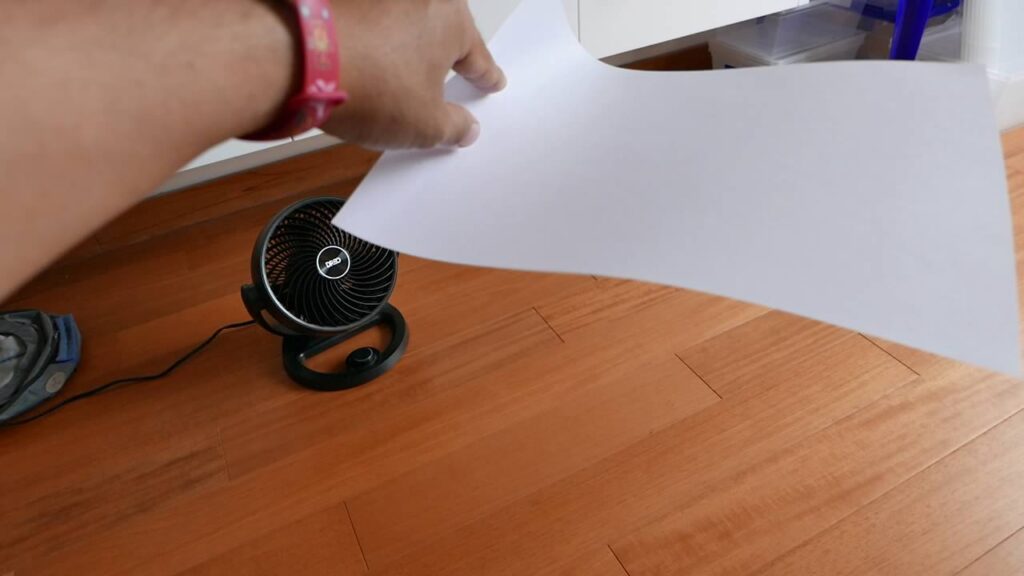
The highest level? That’s a different story. It’s powerful—almost too much for close-range use. I only use it when I want to clear out heat from a room quickly.
But it’s not perfect.
There’s this one issue that shows up depending on the angle. Tilt it a certain way, and it starts to vibrate. Not always, not consistently—but when it happens, it’s annoying. The kind of noise that breaks the whole “quiet fan” experience.
And yeah, sometimes the fix is as low-tech as it sounds: a couple of taps, and it settles down again.
Not elegant, but it works.
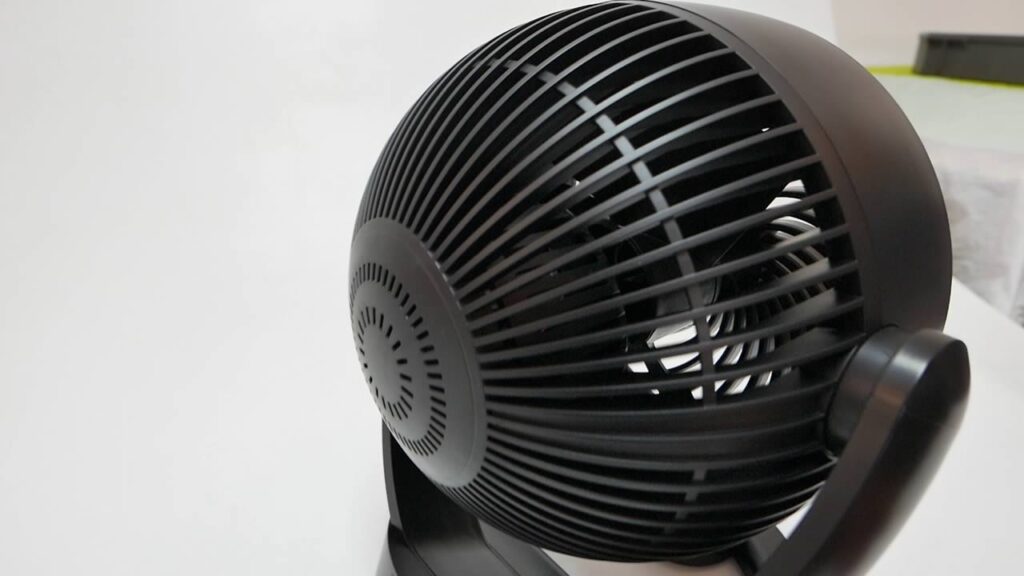
After two years, dust buildup was inevitable. I decided to open it up, expecting at least some resistance—but it was surprisingly easy. One screw, and the rest comes apart without a fight.
Cleaning it took maybe 10 minutes. Damp cloth for the blades, a brush for the grille, done. No complicated disassembly, no fragile parts. That’s the kind of detail you only appreciate after living with something for a while.
There’s also this small design quirk with the control knob.

It doesn’t follow the usual logic.
Instead of going from off → low → medium → high, it goes:
off → high → medium → low (clockwise).
So every time I turn it on, I have to pass through two levels just to get to the one I actually use. Same thing in reverse to turn it off. It’s not a big issue, but it’s one of those things you notice every single day.

The fan tilts vertically up to 90 degrees—straight to the ceiling if you want—but it doesn’t oscillate. It stays fixed unless you move it manually. There are other models from the same brand that do oscillate, but this one keeps it simple.
I keep mine on the floor, though it can be mounted on a wall if needed.
And after all this time, the verdict isn’t dramatic.
It’s just… consistent.
It cools well. It stays quiet (most of the time). It’s easy to maintain. And for what I paid, it still feels like a small win every time I use it.
Except, of course, when it decides to remind me it’s not perfect.


