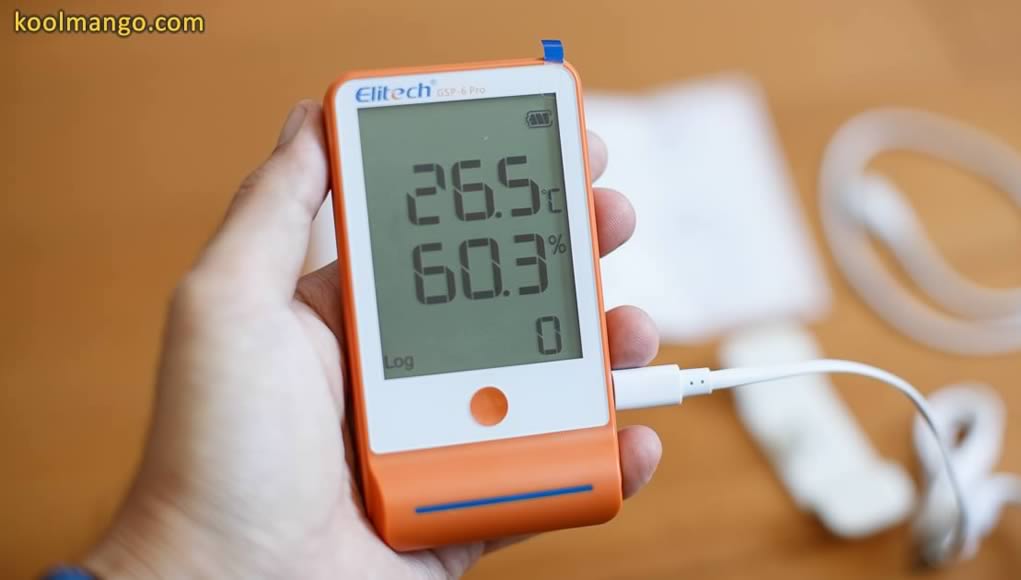
To conduct this in-depth analysis, I decided to go all out and bought two different versions: the standard one with a classic temperature and humidity sensor (GSP-6Pro-TE/THE) and the specialized version with a dual temperature sensor and glycol buffer (GSP-6Pro-GTDE).
For an entire month, I put them to the test in a real-world scenario, accumulating a massive history of over 50,000 data points. In this review, I’m going to tell you absolutely everything I discovered: from whether its price tag is truly worth it, to how this little device became my best ally in saving my own refrigerator. A quick spoiler? That sea of data gave me the exact evidence needed to detect a subtle lack of refrigerant that the technician had overlooked, successfully getting him to correct his repair. If you are going to buy it for your business, laboratory, or personal project, stick around; this is what the manual doesn’t tell you.
Elitech GSP-6Pro: Fast Facts
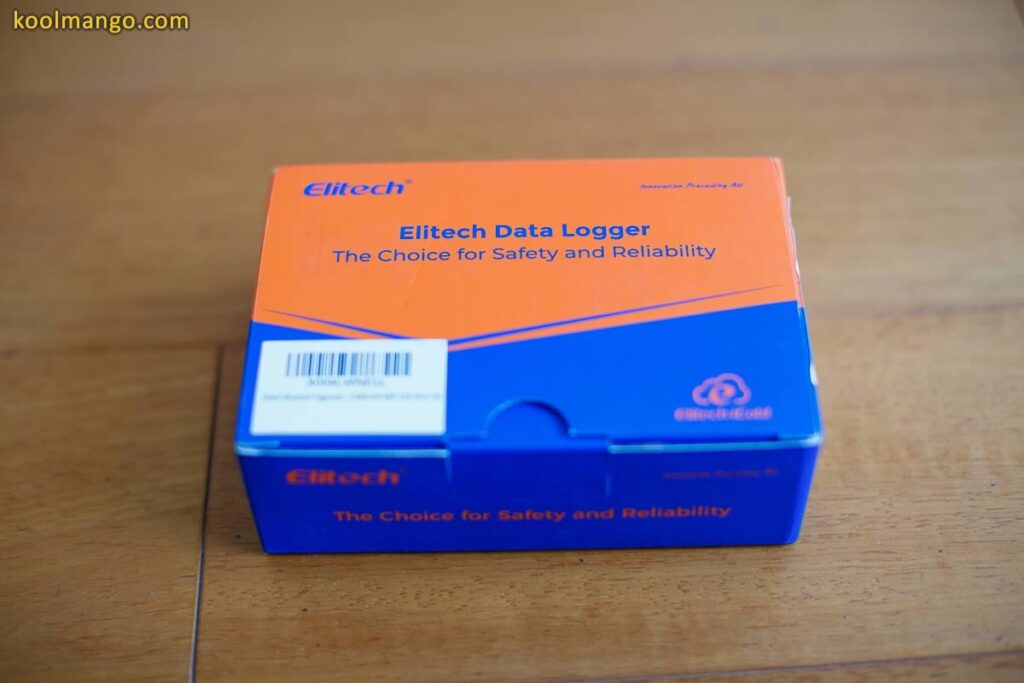
- Available in 4 probe variants: Although the data logger’s body is exactly the same, Elitech offers four external sensor configurations to adapt to every need. (Further down, I will explain in detail which one you should choose based on your specific case):
- GSP-6Pro-TE/THE – The Standard (Bestseller): Includes one temperature probe and one humidity probe. It is the ideal choice for general environmental control and most commercial refrigerators.
- GSP-6Pro-GTDE – Dual probe with glycol buffer: Features two temperature probes submerged in small glycol vials (and omits the humidity sensor). This system is designed to mimic the thermal inertia of a drug or dense food item, preventing false alarms from quick refrigerator door openings and offering much more stable readings.
- GSP-6Pro-GLE/THE – Mixed probe (Glycol + Humidity): Combines the best of both worlds, including a temperature probe with a glycol buffer and a probe to measure relative humidity.
- GSP-6Pro-TLE – For ultra-low temperatures: A specialized variant featuring a probe capable of withstanding extreme ranges of -85~150°C (-121~302°F), designed specifically for laboratory ultra-freezers or critical vaccine transport.
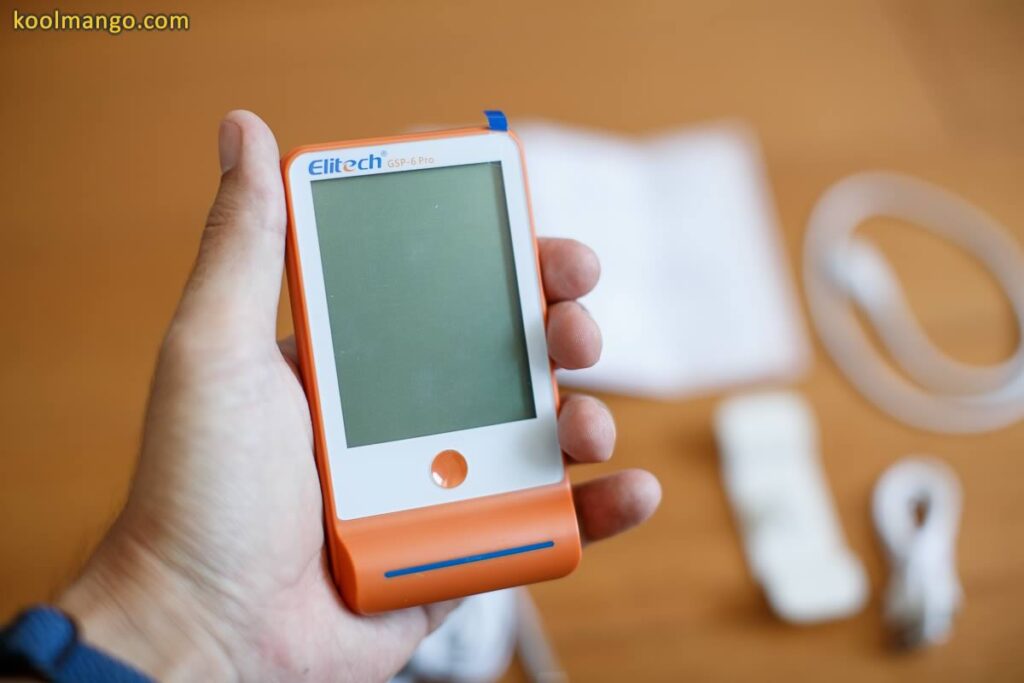
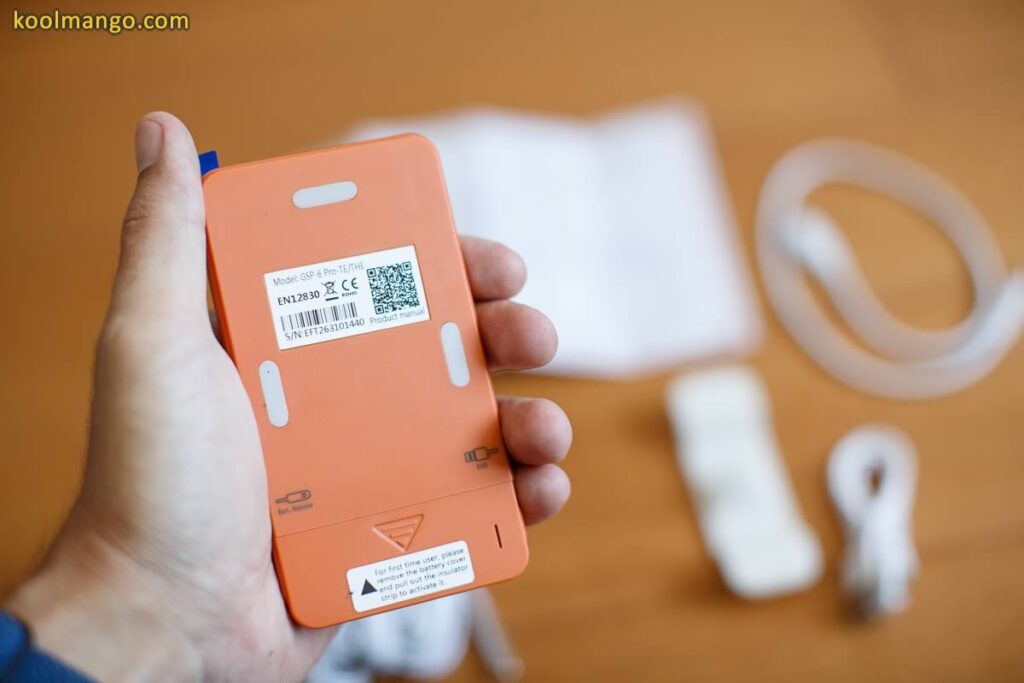
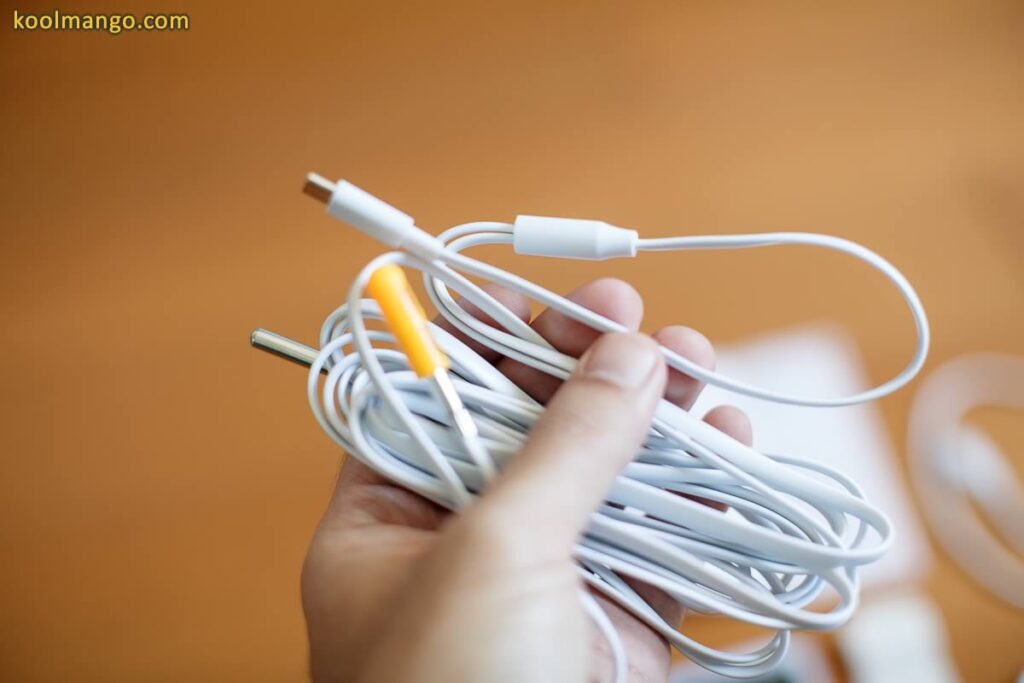
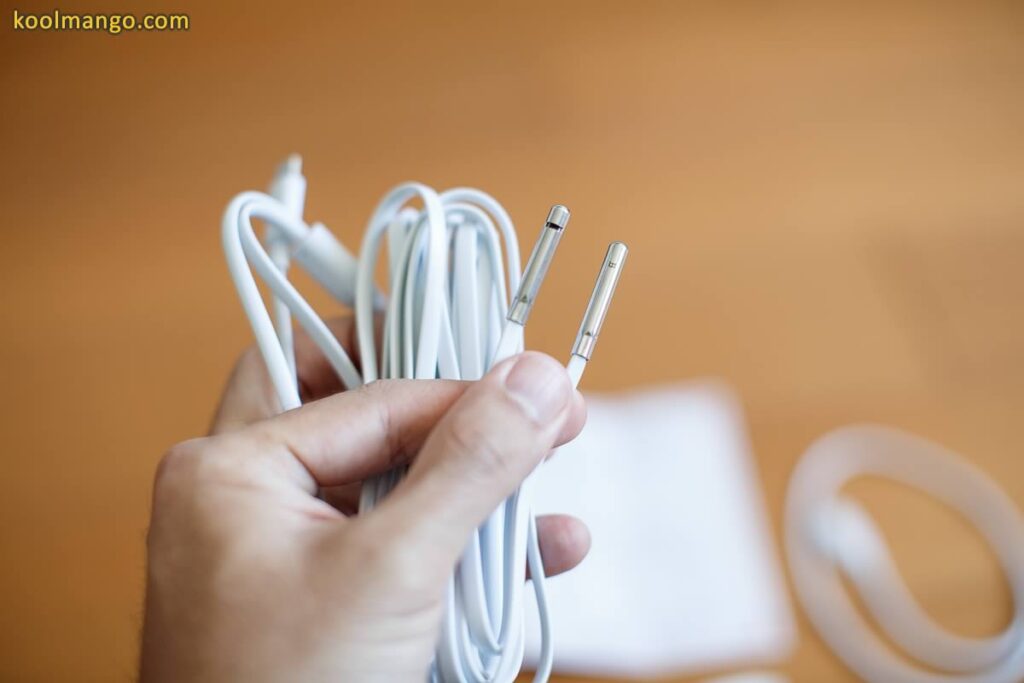
- Compact, solid, and magnetic design: It is a small, lightweight device built with a rigid plastic that feels very high-quality. It features a large, clear 3.3-inch LCD screen (a pro-tip: you can leave the factory plastic protector on to prevent scratches, as it doesn’t affect visibility at all). The back incorporates powerful magnets ideal for sticking it directly to a refrigerator’s metal door. Additionally, it runs very efficiently on a single AA battery (already included).
- Pharmaceutical-grade accuracy and calibration: It comes factory-calibrated and ready for health audits. Its external probes have an extreme measurement range of -40~85°C (-40~185°F) with a very high accuracy of ±0.3°C / ±0.6°F, while the humidity spectrum covers 0%~100% RH.
- Bluetooth Connectivity and Free App: It allows you to wirelessly sync the device with your phone or tablet to review the full history or check real-time readings. This means you can audit the data just by walking past the refrigerator, without having to remove the device from its spot or plug it into a PC to download the information.
⚠️ Golden rule for installation: The body of the Elitech GSP-6Pro must always remain at room temperature. Only the cable probes should be inserted into the freezer or cold room. Never put the entire device inside the refrigerator, as the thermal shock will generate internal condensation and damage the electronic board.
Elitech GSP-6Pro: Price
I bought two units of the standard GSP-6Pro-TE/THE model for $79.78 on Amazon and one of the specialized glycol version, the GSP-6Pro-GTDE, for $49.99, taking advantage of the free shipping benefit to Peru.
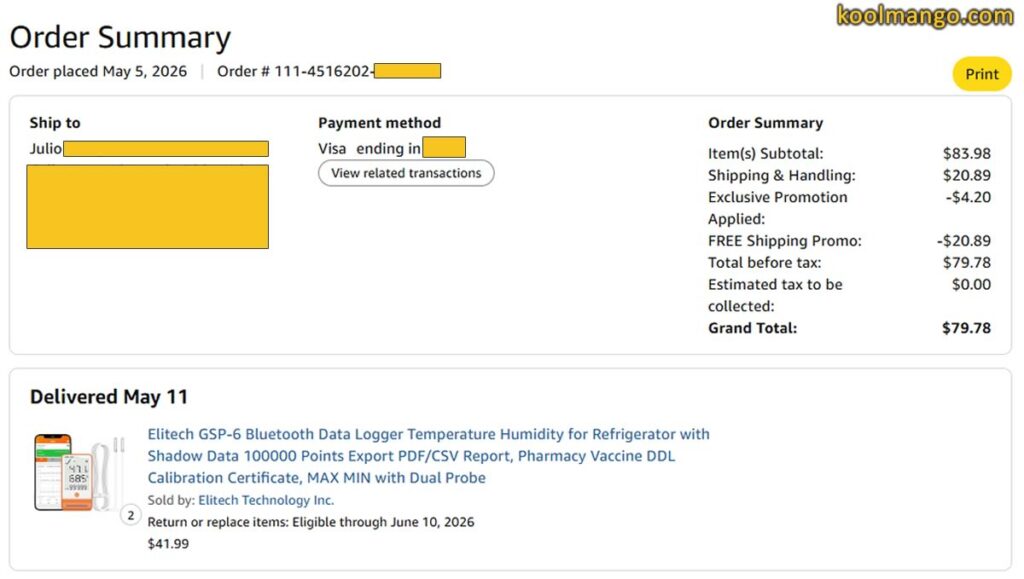
Honestly, the price seems more than fair to me. The equipment feels quite durable, has a great design, and is packed with advanced features for temperature and humidity data collection and analysis. If you want to check the current cost or see if they have any active deals today, you can check them out directly here:
- 🛒 Check current price of the Elitech GSP-6Pro (Standard) on Amazon
- 🛒 Check current price of the Elitech GSP-6Pro-GTDE (Glycol) on Amazon
Elitech GSP-6Pro: What’s in the Box?
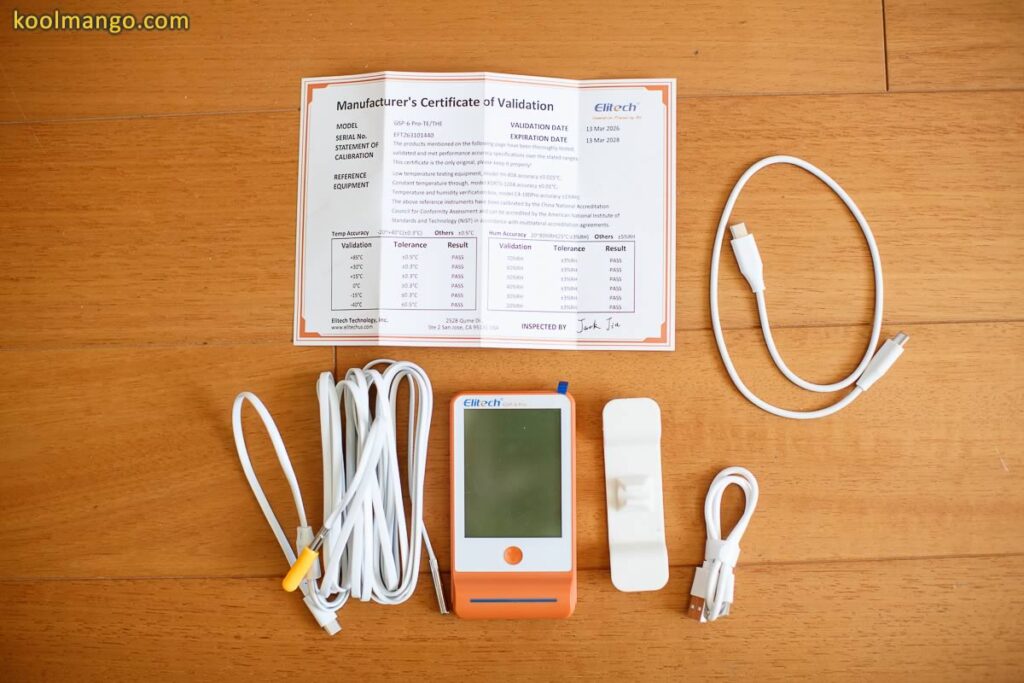
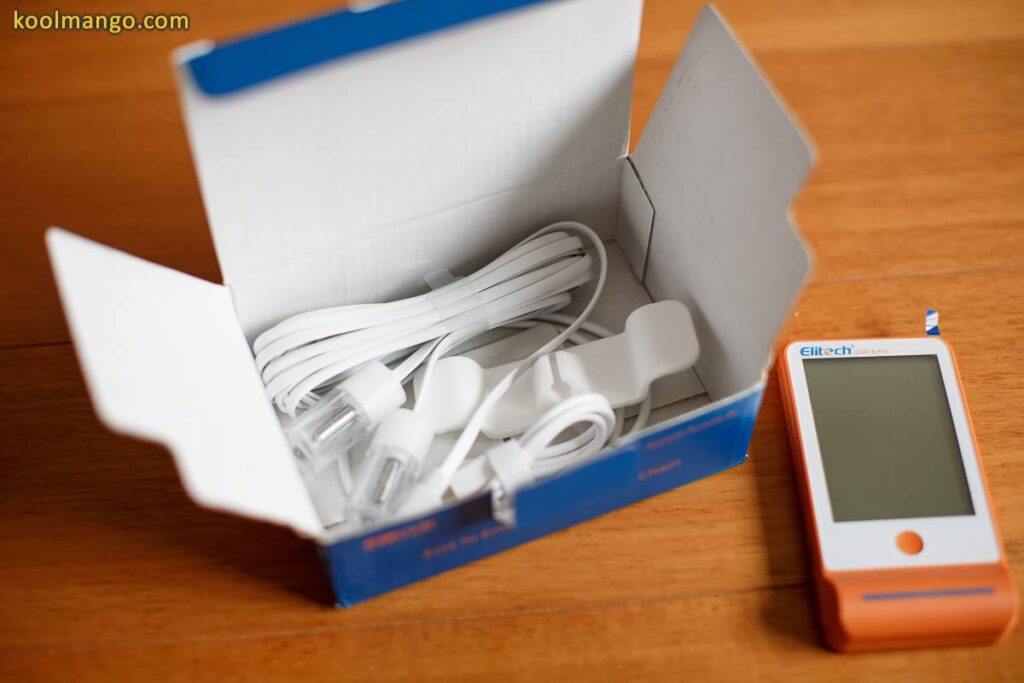
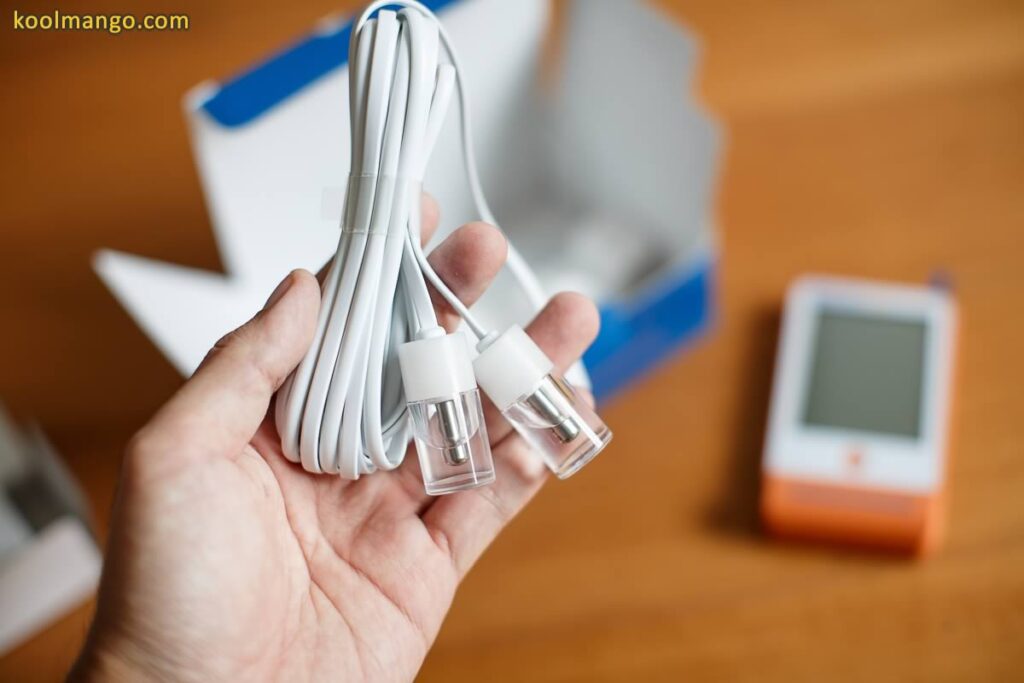
Here is everything that comes included:
- The device (includes AA battery)
- The sensor probe. This is a cable with a USB-C connector that splits into two. Its profile is FLAT, NOT ROUND, which is optimal since the cable will be squeezed by the refrigerator door. It is also over 2 meters long.
- A clip to secure the probe inside the refrigeration cabinet, featuring double-sided adhesive.
- A USB-C to USB-C cable
- A USB to USB-C cable
- A factory certificate of calibration and accuracy
Elitech GSP-6Pro: Special Functions
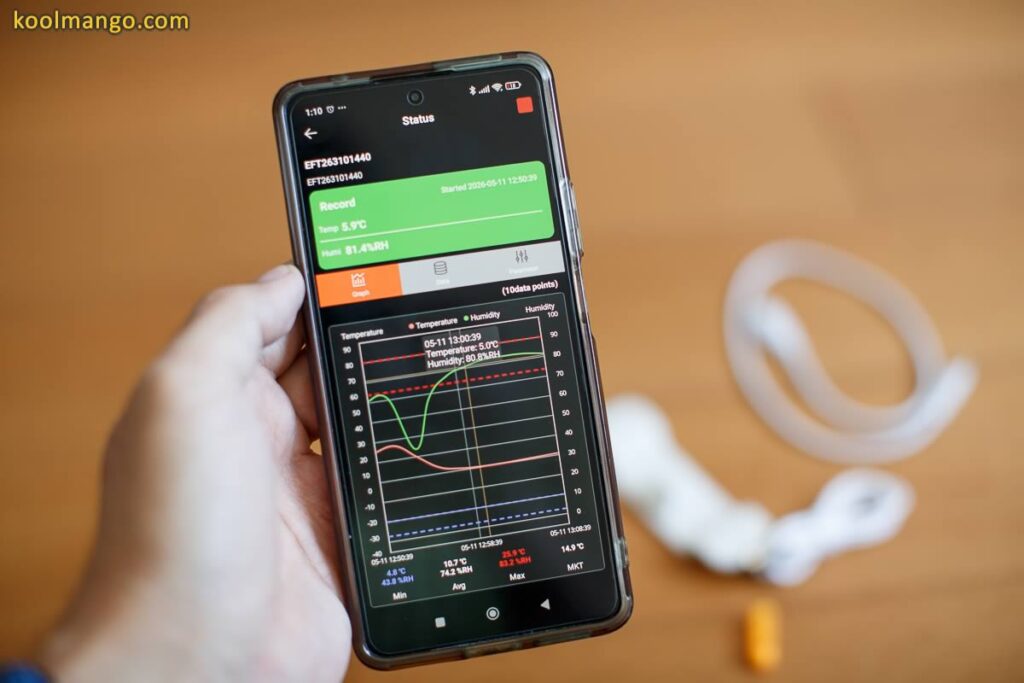
- Comprehensive Reporting: It can generate data reports in both Excel and PDF formats, complete with graphs.
- Customizable Intervals: It can capture data points at intervals ranging from every 10 seconds up to every 24 hours.
- Peak Tracking: It records the minimum and maximum temperatures hit since the beginning of the data collection cycle.
- Advanced Metrics: It automatically calculates the mean temperature as well as the Mean Kinetic Temperature (MKT).
- Smart Alerts: It features a configurable alarm system that triggers based on your specific target thresholds.
- Centralized Management: The mobile app can connect to all of your data loggers simultaneously, allowing you to manage multiple devices from a single, easy-to-use dashboard.
Elitech GSP-6Pro: What Exactly Does It Do?
The Elitech GSP-6Pro is a professional data logger designed to intelligently monitor and record temperature and relative humidity.
Its most important features include:
- Customized Logging: You can configure the sampling interval according to your specific process, capturing temperature and humidity data anywhere from every 10 seconds to every 24 hours.
- Visual Monitoring: It generates interactive line graphs within its app to track the cold chain of food, pharmaceuticals, or sensitive materials over time.
- Advanced Analysis (MKT): It doesn’t just save history or calculate a simple average; it processes the Mean Kinetic Temperature (MKT).
💡 Technical Note on MKT: This parameter is the gold standard in the pharmaceutical and food industries for evaluating the impact of thermal fluctuations during storage or transport. Based on the Arrhenius equation, MKT does not average data linearly; instead, it penalizes and assigns greater weight to higher temperature spikes, ensuring the report accurately reflects whether the product actually suffered any degradation in quality or efficacy.
Elitech GSP-6Pro: What Is It Used For?
The use of temperature and humidity data loggers is critical in any sector where variations in these variables can alter the quality, safety, legality, or shelf life of a product or process. It is not just about knowing the current temperature, but about proving through an uninterrupted history (traceability) that conditions remained stable.
- Pharmaceutical, Medical, and Laboratory Industry: This is one of the most strictly regulated sectors. Failing to maintain thermal ranges can inactivate vaccines or alter clinical results.
- Food Industry and Gastronomy: Here, using a data logger is vital to prevent bacterial proliferation and guarantee food safety (HACCP systems).
- Logistics, Supply Chain, and Foreign Trade: International trade demands proof that merchandise traveled under optimal conditions before being accepted at the destination port.
Why a Data Logger and Not a Regular Thermometer?
The key is evidence. A digital thermometer only tells you the temperature at that exact moment. A data logger actively records data every few minutes for days, weeks, or months. It generates unalterable PDF or Excel reports that serve as legal backup for health audits, supplier claims, or insurance policy payouts due to lost cargo.
Elitech GSP-6Pro: Real-World Applications
Although the Elitech GSP-6Pro was born for laboratories and industry, its precision makes it an incredible ally for everyday and niche situations where a temperature error can be very costly.
These are the most common and interesting personal use cases:
- Health and Wellness (Insulin and Medication Monitoring): This is a crucial tool for diabetic patients. It allows for strict monitoring of insulin temperature (which must stay between 2°C and 8°C) and lets you configure audible safety alerts, preventing the medication from losing effectiveness due to an oversight or a power outage.
- Home Auditing (Post-Fridge Repair): In my particular case, I used it to monitor my refrigerator’s performance after it was serviced by a technician. By leaving the probes to record, I could verify if the cooling cycles were correct, if the automatic defrost system kicked in on time, and if the temperature remained stable.
- Artisanal Processes and Fermentation: Because it measures both temperature and humidity, it is ideal for homebrewers, sourdough bakers, or those aging cheeses and cured meats, where a heat spike or dry spell can ruin the entire batch.
- High-Precision Hobbies (Wine Cellars, Humidors, and Terrariums): It helps protect the investment of premium wine or cigar collectors, ensuring the environment doesn’t damage the product. It is also excellent for controlling the microclimate in domestic greenhouses or exotic pet terrariums.
In short, you don’t need to be a logistics company: if you have something valuable at home that relies on the climate to be preserved or function properly, this device is your best guarantee.
Elitech GSP-6Pro: My Experience
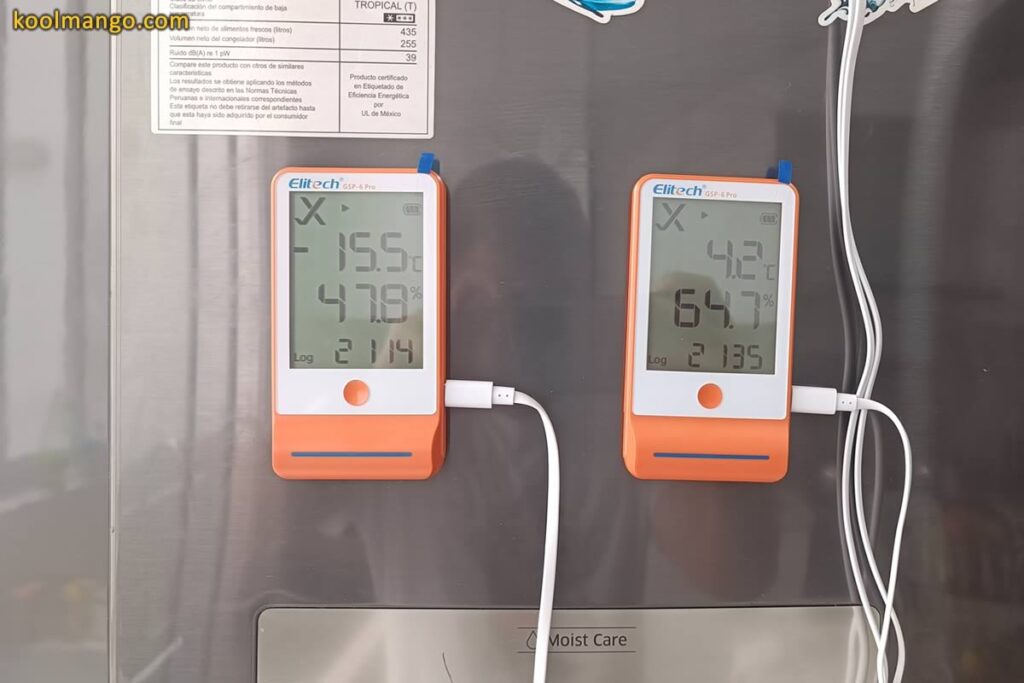
I put this device to a very unique use. I don’t work in refrigeration, the food industry, or pharmaceuticals; I am a software engineer and content creator. Therefore, my reason for buying this product was highly specific, and I believe that if something similar ever happens to you at home, you will find it incredibly useful to have this tool on hand.
💡 TL;DR: My refrigerator broke down, and I was scammed by the first technician. I contacted a second specialist and bought this data logger to monitor real-world temperatures. Thanks to the graphs, I proved that the appliance was cooling inefficiently due to an incorrect refrigerant charge. Armed with data, I requested the technician return and perform the exact charge by weight (in grams) as specified by the manufacturer. After correcting it and monitoring it again, the cooling performance was finally optimal.
This is the full story of how data saved my investment.
From a Scam to Absolute Control: My Story
Our refrigerator had been failing for a month, and we hadn’t even noticed it at home; the only subtle symptom was that the ice cream was no longer as hard as usual. When I called the first technician, I fell into the classic trap: out of desperation and ignorance on the subject, I trusted him and ended up getting scammed. He made me buy a brand-new compressor motor, claiming that was the issue. After replacing it, he had to return three times, and the appliance still wasn’t cooling properly.
I decided to cut my losses. By that point, I had spent two whole days on the internet devouring information about refrigeration. I discovered a fascinating world and understood how the solution should be approached.
I hired a second technician and asked him to test the old motor (the “broken” one). The result? It worked perfectly. The real problem was a simple leak. Equipped with my new knowledge, I bought an Elitech ELD-210 leak detector (you can find the review on the blog), the technician located the fissure, brazed it, and proceeded to charge the refrigerant gas.
Then came the second misstep: although I suggested he charge the gas by weight using a scale—as strictly required by the manufacturer—the technician relied on his “experience” and did it by eye (based on pressure). As he left, he dropped a phrase that set off my alarm bells: “If there are any issues, I’ll come back and throw more gas into it.” (Spoiler alert: a few days later, I ended up buying a digital scale too).
The Rustic Method vs. The Need for a Data Logger
The appliance started cooling, but as an IT professional, I didn’t want guesswork; I needed to back up with real data whether the machine was operating efficiently.
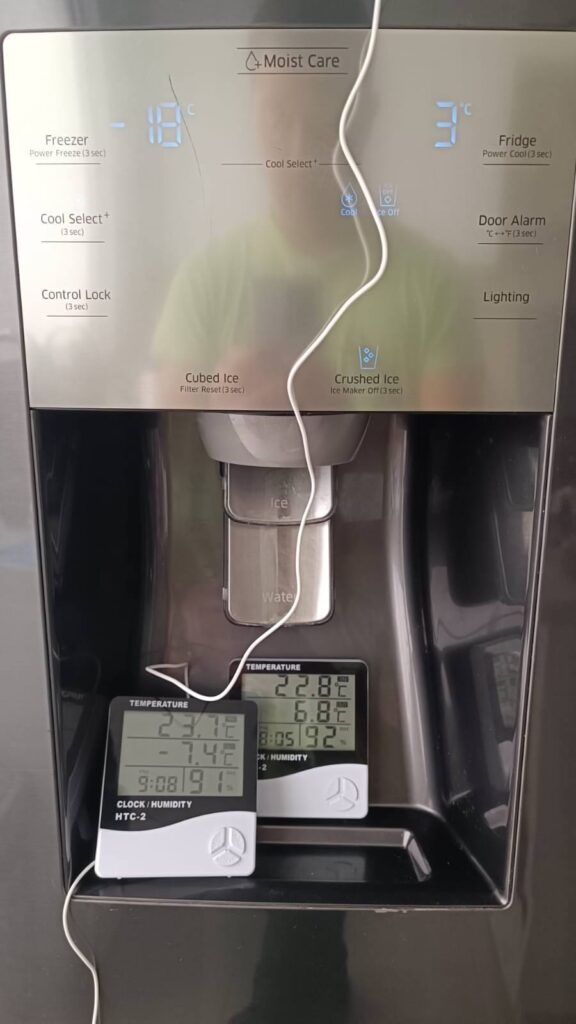
At first, I tried the old-school method: I placed two analog thermometers inside and took photos of them with my phone every so often to keep a manual log. It was incredibly tedious. While the empty freezer showed a promising -19°C (-2.2°F) the next day, reality changed the moment we started stocking it with food: the temperature fluctuated too much, and the system felt inefficient.
Tired of taking pictures of a thermometer, I researched automated solutions until I discovered data loggers. I went on Amazon and bought the classic model that includes one temperature probe and one humidity probe.
The Technical Challenge: Diagnosing the Triple Cooling System
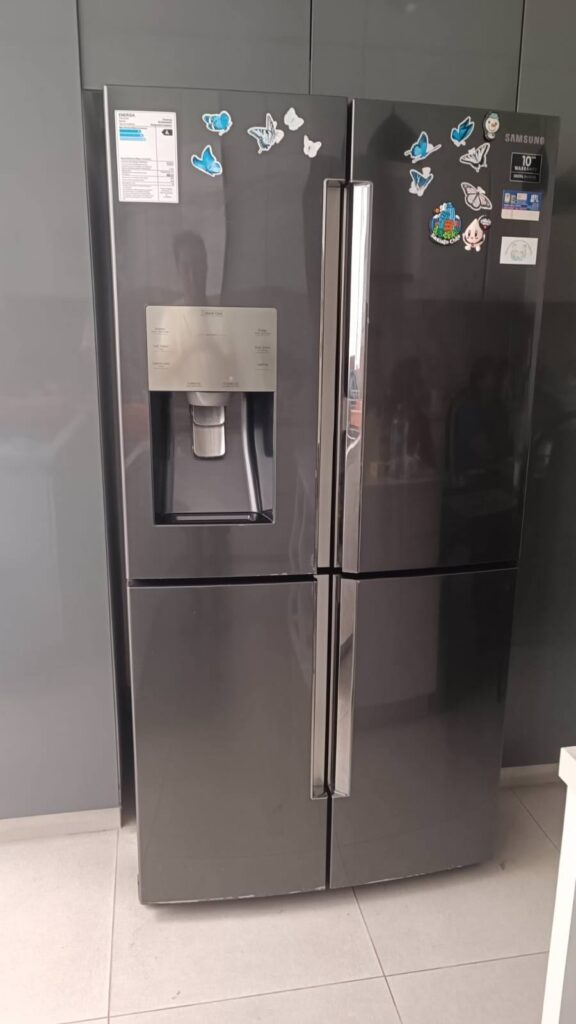
My refrigerator is a Samsung French Door with a Digital Inverter motor and a Triple Cooling system. Unlike a conventional appliance, this model features three chambers with independent cooling systems. The software regulates the motor’s RPM based on internal temperature, and the refrigerant is distributed independently to each chamber via an electronic valve.
The refrigerant can circulate through one, two, or all three chambers at the same time to cool with the lowest energy consumption. However, that very sophistication has a critical tipping point: if the refrigerant mass is not exactly what the factory specification demands (which is detailed in grams on the appliance’s label), performance and efficiency completely collapse.
This is where the Elitech GSP-6Pro became indispensable. With this monitor and its external probes, I could observe the internal cooling cycles between the three chambers in real time and see how the temperature attempted to regulate itself. The graphs immediately exposed the problem visually:
- The Impact of Daily Use: On grocery shopping days when new food was stored, the graph clearly showed the system struggling to extract the heat, taking more than an hour to “flatten” the temperature back to the expected level.
- Uncontrolled Defrost Spikes: I recorded abrupt temperature spikes that lasted nearly an hour and repeated every 24 to 30 hours (the evaporator’s automatic defrost cycles). The serious part was that in the freezer, the temperature rose up to 2°C (35.6°F)—breaking the freezing point—and then took hours to return to the ideal -18°C (0°F).
The Conclusion: Data Doesn’t Lie
To solve this mystery, I didn’t rely on assumptions; I ran an experiment with rigorous methodology:
- The Setup: Two Elitech GSP-6Pro units measuring air temperature (one in the fridge compartment and one in the FlexZone).
- The Secret Weapon: The GSP-6Pro-GTDE model, with one glycol sensor in the fridge and another in the freezer to simulate the actual temperature of the food, isolating the readings from misleading air currents.
- The Frequency: Strict data capture every 2 minutes.
The process was split into two stages: two weeks of pre-repair monitoring and two weeks of post-repair auditing. The final result was a massive history of over 50,000 data points.
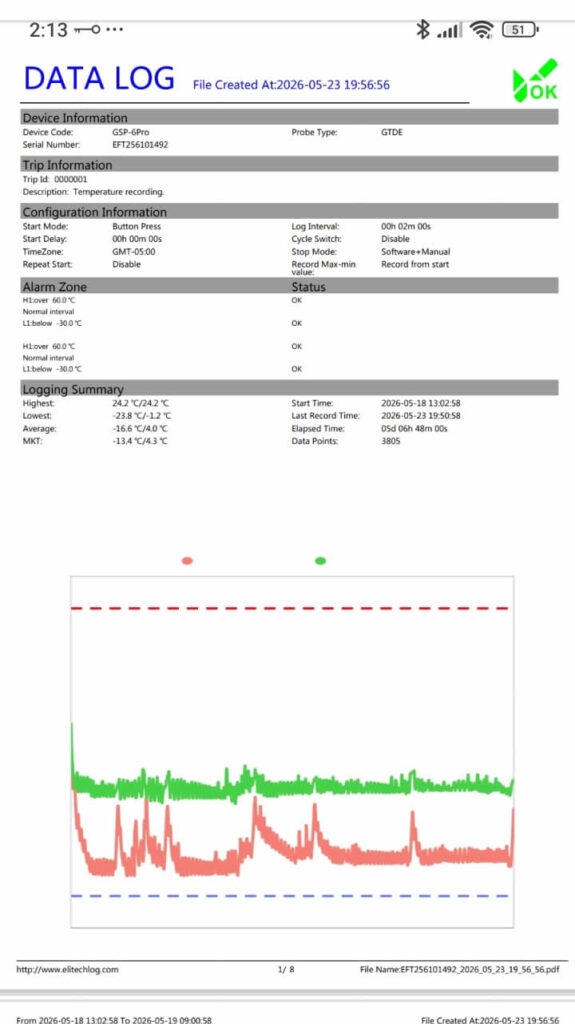
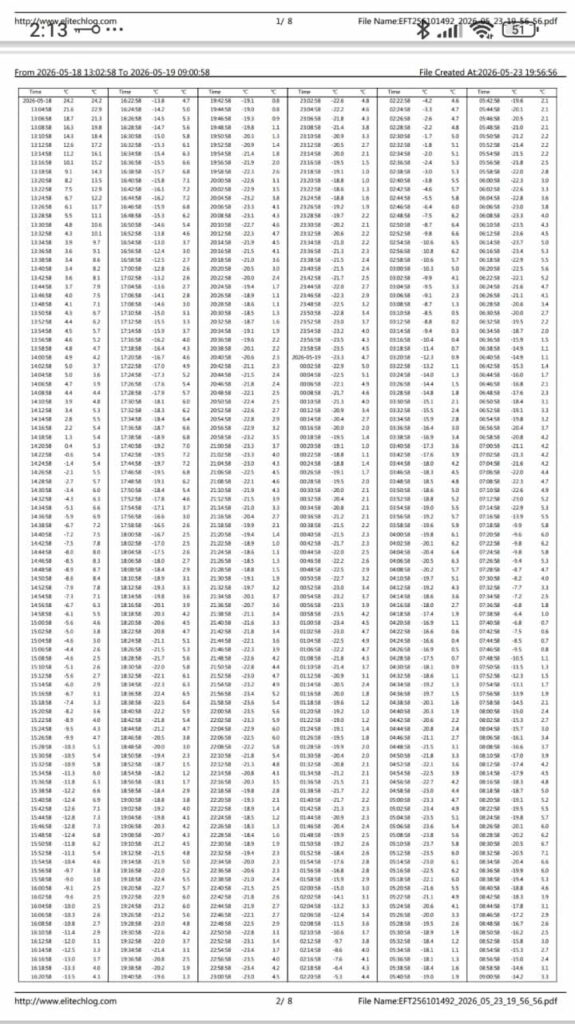
In the first phase, the graph confirmed my suspicion: the refrigerator had a gas undercharge (it was short on refrigerant). Because there was less gas mass, the system underperformed, forcing the inverter motor to work overtime at high RPM. This increased energy consumption without ever managing to stabilize the cold.
Armed with the evidence, I called the technician back. When I showed him the actual performance of the appliance documented by the data logger, he had no arguments left to counter. He proceeded to recover the system, pull a vacuum again, and this time, charge the gas using the scale, respecting the exact grams specified by the manufacturer.
The analysis of the two weeks following the weight-based recharge showed a radical change: the cooling cycles normalized, temperature recovery after opening the doors became rapid, and the defrost spikes remained controlled well below freezing.
Without this device, I would have never known what was happening behind the refrigerator walls, I would have spent a fortune on electricity, and my food would have been at constant risk.
Is the Investment Worth It?
If you are ready to stop guessing what is happening with your equipment, laboratories, or refrigeration projects, the Elitech GSP-6Pro is a tool that pays for itself.
If you decide to buy it, you can support this blog by using my Amazon affiliate links (it costs you nothing extra and helps me keep bringing you in-depth analyses like this one):
- 🛒 Check price of the Elitech GSP-6Pro (Standard Version – Air) on Amazon – Ideal for general ambient monitoring and rapid airflows.
- 🛒 Check price of the Elitech GSP-6Pro-GTDE (Glycol Version) on Amazon – The one I used to simulate the actual temperature of food/vaccines in both the fridge and freezer compartments.